Hey there. Telecoms have a lot of depreciation and amortization on the income statement. What this does is impacts earnings per share with non-cash items. Capital expenditures are typically laid out in a single year and then depreciated over time. For example, a company may spend $1B on an asset in 2025 and depreciate it over the next 10 years, meaning $100M will come off the income statement every year for a decade. The company has already laid out the cash for the asset years ago, but it is still impacting earnings today.
This is a very basic example of depreciation and it gets a bit more complex than that, but the premise is the same.
With telecoms being so infrastructure and capital expenditure heavy, this is no doubt going to have an impact on earnings. So, the better area to look is free cash flows. Free cash flows is the actual amount of cash the company has generated in a particular quarter/year. It takes the operating cash flows of the company, substracts its capital expenditures to get to their free cash flow. So in this case, that expense of $1B would be realized immediately and not in forward years.
Dividends are paid out of free cash flow. There are some rare instances where free cash flow isn't all that relevant, lets say financial companies for example because they have a lot of cash outflows (loans) and their income general comes from interest payments coming in. But in general, I try to utilize the FCF payout ratio for most companies.
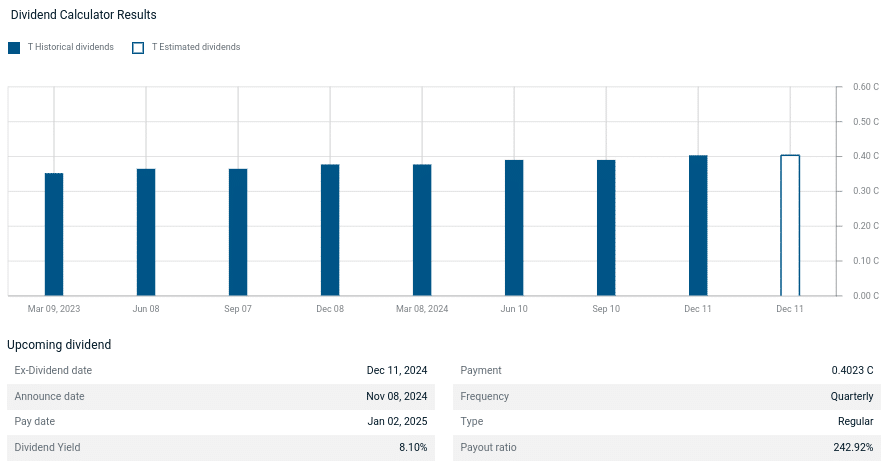
Telus expects to generate around $2.2-$2.3B in free cash flow this year and it will owe around $2.4B in dividends. So, a slight shortfall in terms of dividend payments. However, the company is expected to cut capital expenditures moving forward, which ultimately increases free cash flow if operating cash flows stay the same or grow. So in this case, the dividend should be covered in 2025. Anything is possible, obviously, but there is a very good chance Telus is able to cover the dividend next year.
Hope this helps.